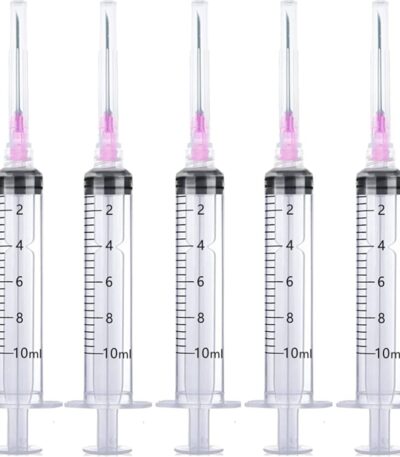
10ml Syringes with Needle – Pack of 100
-
Capacity: 10ml
-
Includes Needle: Common sizes include 21G, 22G, or 23G (varies by manufacturer)
-
Sterile & Individually Packed – guaranteed safe for clinical use
-
Clear, bold graduation markings for precise measurement
-
Smooth plunger action for easy and controlled injection
-
Latex-free, medical-grade materials
-
Available in Luer Lock or Luer Slip depending on supplier
-
Non-toxic & non-pyrogenic
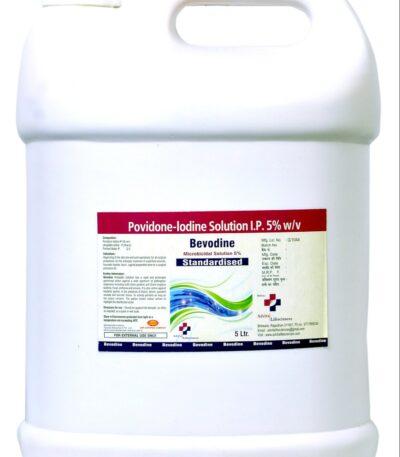
5% 5 Litre Bevodine Povidone Iodine Solution
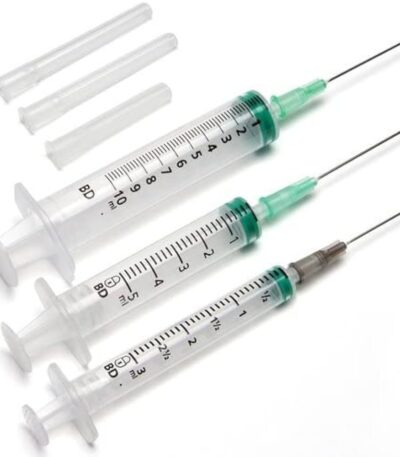
5ml Syringes with Needle – Pack of 100
-
Capacity: 5ml
-
Includes Needle: Typically 21G, 22G, or 23G (varies by manufacturer)
-
Sterile & Individually Packed – ensures maximum hygiene
-
Latex-free barrel and plunger
-
Clear, easy-to-read graduation marks for accurate dosing
-
Smooth plunger movement for controlled injection
-
Luer lock or luer slip options depending on the brand
-
Medical-grade material – safe for injections and draw-ups
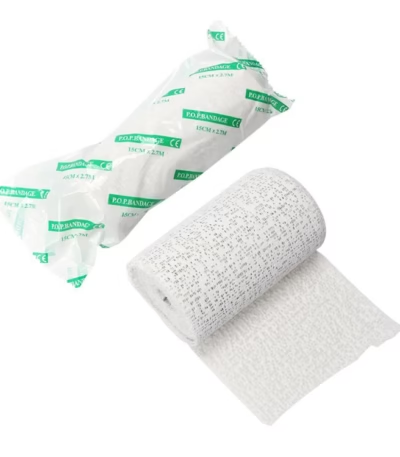
A Plaster of Paris (P.O.P.) Bandage Roll 6″ (China)
-
Purpose & Use
-
A 6-inch P.O.P. bandage is commonly used for immobilizing fractures and orthopedic injuries.
-
Suitable for making casts and splints on medium-sized limbs such as the forearm, lower leg, and elbow/knee supports.
-
Widely used in emergency rooms, orthopedic clinics, and trauma care.
-
-
Material & Properties
-
Made of woven gauze impregnated with Plaster of Paris powder.
-
Activates when soaked in water and hardens quickly to form a rigid cast.
-
China-manufactured rolls are economical and reliable for routine clinical use.
-
-
Size & Specifications
-
Width: 6 inches (ideal for mid-sized limbs).
-
Length: typically 2.7–3 meters per roll (varies by manufacturer).
-
Individually wrapped in moisture-resistant packaging.
-
-
Setting Time & Performance
-
Begins to set in 3–7 minutes after wetting.
-
Molds smoothly to body contours before hardening.
-
Provides a strong, durable cast once completely dry.
-
-
Advantages
-
Cost-effective and easy to apply.
-
Offers excellent rigidity for immobilization.
-
Smooth finish when applied correctly.
-
Suitable for both emergency splinting and definitive casting.
-
-
Usage Guidelines
-
Dip the roll briefly in clean water until bubbling stops.
-
Apply over a padded layer for patient comfort.
-
Smooth each layer to ensure uniform strength.
-
Allow 24–48 hours for full drying before weight-bearing.
-
Store rolls in a dry, cool area to prevent premature setting.
-
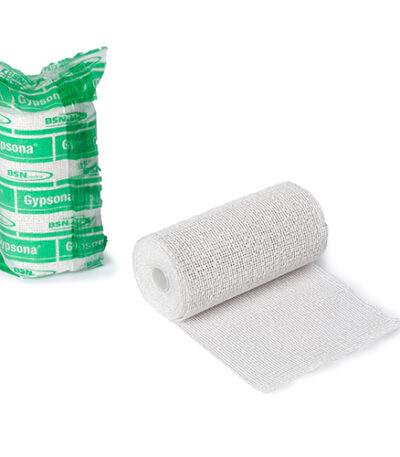
A Plaster of Paris (P.O.P.) Bandage Roll 6″ gypsona roll
-
Purpose & Use
-
A Gypsona-type P.O.P. bandage is a premium-grade plaster bandage used for orthopedic casting and immobilization.
-
Suitable for fractures, sprains, post-operative support, and casting in orthopedics and emergency care.
-
6-inch width is ideal for forearm, lower leg, and medium limb immobilization.
-
-
Material & Quality
-
Made of high-quality gauze uniformly impregnated with fast-setting Plaster of Paris.
-
Gypsona rolls are known for:
-
Higher plaster content than standard China rolls
-
Smoother finish
-
Stronger and more durable casts
-
Faster setting and drying times
-
-
-
Size & Specifications
-
Width: 6 inches
-
Length: typically 2.7–3 meters (varies slightly by brand)
-
Moisture-resistant packaging to maintain shelf life and prevent premature setting.
-
-
Setting Time & Performance
-
Fast-setting: begins to harden within 2–4 minutes after wetting.
-
Achieves full strength faster than economic-grade P.O.P. rolls.
-
Produces a smooth, rigid, and durable cast suitable for long-term immobilization.
-
-
Advantages (Gypsona vs Regular P.O.P.)
-
More consistent plaster distribution on the gauze.
-
Reduced risk of cracking or weak spots.
-
Requires less smoothing during application.
-
Better contour molding and cast integrity.
-
Preferred in orthopedic departments for quality and reliability.
-
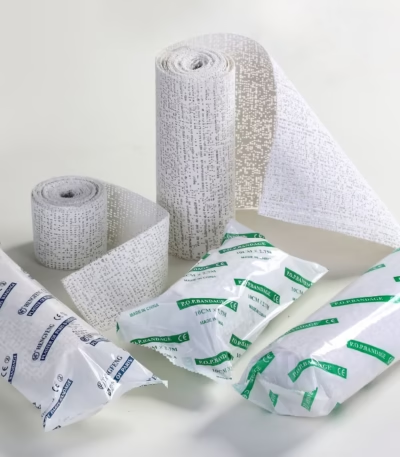
A Plaster of Paris (P.O.P.) Bandage Roll 8″ (China)
-
Purpose & Use
-
A Plaster of Paris (P.O.P.) bandage is used for immobilizing fractures, sprains, and orthopedic injuries.
-
Ideal for forming casts, splints, and supportive immobilization in emergency or orthopedic care.
-
-
Material & Properties
-
Made of gauze bandage impregnated with Plaster of Paris powder.
-
Activates and hardens when soaked in water.
-
Provides a rigid, durable cast once set.
-
China-origin rolls are known for being economical and widely used in general clinical settings.
-
-
Size & Specifications
-
Width: 8 inches (suitable for larger limbs such as thighs or long-arm/long-leg casts).
-
Length varies by manufacturer (commonly 2.7–3 m per roll).
-
Packaged individually in moisture-resistant wrapping.
-
-
Setting Time & Performance
-
Fast-setting once dipped in water (typically 3–7 minutes depending on brand and water temperature).
-
Molds easily around the body part before hardening.
-
Produces a smooth, strong cast suitable for immobilization.
-
-
Advantages
-
Cost-effective for hospitals and emergency units.
-
Easy to shape and apply.
-
Offers excellent rigidity after setting.
-
Reliable for fracture management and post-surgical immobilization.
-
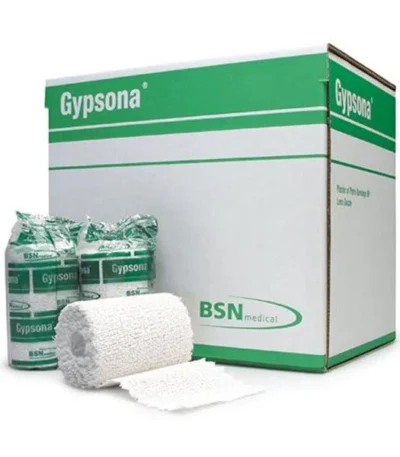
A Plaster of Paris (P.O.P.) Bandage Roll 8″ gypsona roll
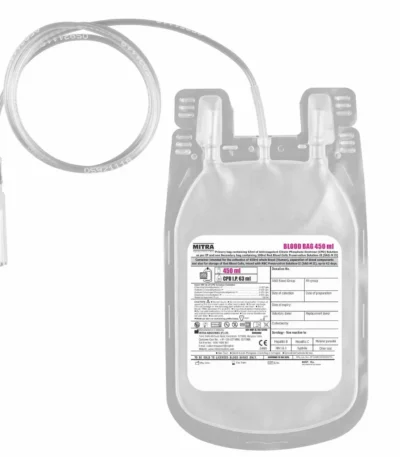
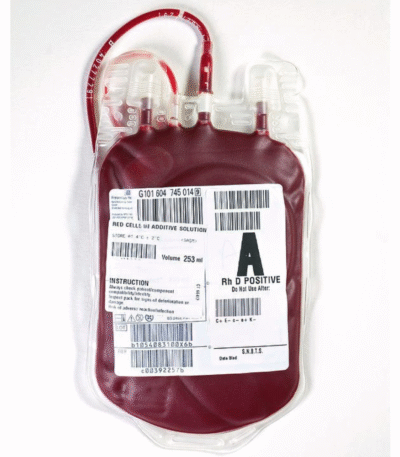
A single 450 mL blood bag
Key Features
-
Capacity: 450 mL (standard for whole blood donation)
-
Type: Single bag – contains only one primary collection bag (no satellite bags)
-
Material: Sterile, medical-grade PVC compatible with blood storage
-
Anticoagulant: Usually pre-filled with CPDA-1 or CPD solution to preserve blood
-
Tubing & Needle: Comes with a sterile 16G needle for venipuncture
-
Labeling Area: For donor information and blood collection details
-
Use:
-
Whole blood collection
-
Storage for up to 35–42 days (depending on anticoagulant)
-
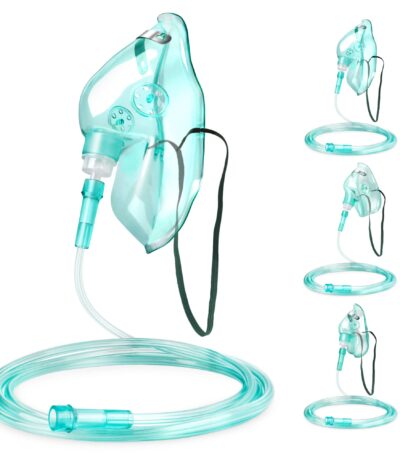
Adult Oxygen Mask
Key Features
-
Adult-sized anatomical shape
Designed to comfortably fit over the nose and mouth of an adult, forming a gentle seal for efficient oxygen delivery. -
Soft medical-grade material
Usually made of clear, flexible PVC to enhance comfort and allow healthcare providers to observe breathing and skin color. -
Elastic head strap
An adjustable strap keeps the mask securely in place without requiring the patient to hold it. -
Flexible nose clip
Many masks include a metal or molded clip that can be adjusted to improve the fit and minimize oxygen leakage. -
Standard oxygen tubing
The mask comes with long, kink-resistant tubing that connects to an oxygen source. Ribbed or star-lumen designs help maintain airflow even if the tube bends. -
Universal connector
Fits standard oxygen outlets on concentrators, wall ports, and cylinders.
How It Works
Oxygen flows from the source through the tubing and into the mask, where the patient inhales it directly. The mask ensures a higher concentration of oxygen compared to room air and is useful for patients who require controlled oxygen therapy.
Common Uses
-
Breathing difficulty due to respiratory illness
-
Emergency resuscitation
-
Post-surgical recovery
-
Chronic lung diseases such as COPD
-
Situations where a nasal cannula is insufficient
Types of Adult Oxygen Masks
-
Simple oxygen mask – provides moderate oxygen concentrations.
-
Non-rebreather mask – delivers high oxygen concentration with one-way valves and reservoir bag.
-
Venturi mask – delivers precise oxygen concentration settings.
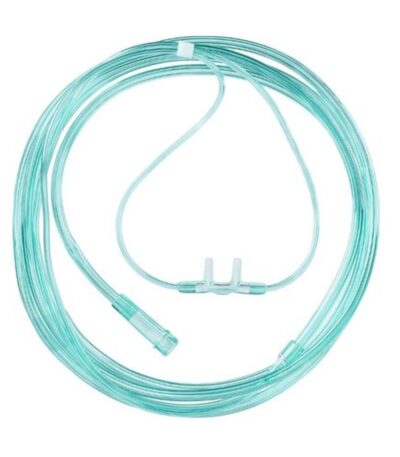
Adult Oxygen Nasal Prong
Key Features
-
Soft dual nasal prongs
Two small curved tips sit inside the nostrils and deliver a steady flow of oxygen without causing significant irritation. -
Flexible, medical-grade tubing
Made of soft PVC designed to rest comfortably over the ears and under the chin, minimizing pressure and skin irritation. -
Kink-resistant design
Often features a star-lumen or ribbed structure that prevents the tube from collapsing, ensuring consistent oxygen flow. -
Universal oxygen connector
The end of the tubing fits standard oxygen outlets on concentrators, cylinders, and wall ports. -
Lightweight and comfortable
Preferred for patients requiring long-term or continuous oxygen therapy because it allows free movement, speaking, and oral intake.
How It Works
Oxygen flows from the supply source through the tubing and exits through the nasal prongs directly into the nostrils. The patient inhales the enriched air naturally with each breath.
Typical Flow Rates
-
Usually used for 1–6 liters per minute
-
Provides 24%–44% oxygen concentration, depending on flow and patient breathing
Common Uses
-
Long-term oxygen therapy for chronic lung disease (e.g., COPD)
-
Mild to moderate respiratory distress
-
Recovery after surgery
-
Home oxygen therapy
-
Emergency and ambulance use
-
Situations where a mask is uncomfortable or unnecessary
Benefits
-
Allows talking, eating, and drinking
-
Less claustrophobic than a mask
-
Minimal obstruction to the face
-
Suitable for extended use