

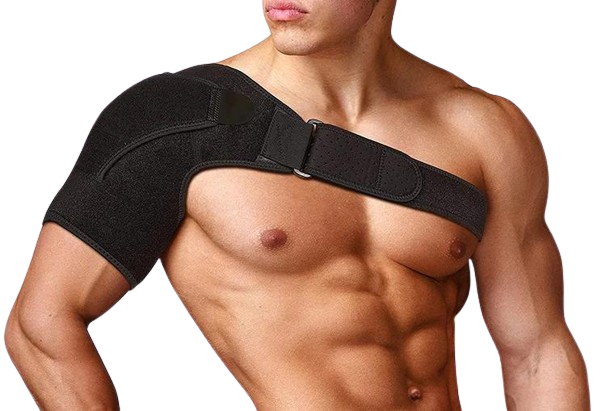
Airprene Should Support
Original price was: KSh 3,200.00.KSh 2,500.00Current price is: KSh 2,500.00.An Airprene shoulder support is a comfortable, flexible brace designed to gently stabilize and protect your shoulder when you’re dealing with pain, weakness, or injury. Made from breathable Airprene material, it provides firm support while still allowing air circulation to keep the shoulder cool.
The support wraps snugly around the shoulder and upper arm, helping reduce strain on the muscles and joints. It limits harmful movements while still allowing enough mobility for everyday activities. Adjustable straps make it easy to customize the fit so you get just the right amount of compression and comfort.
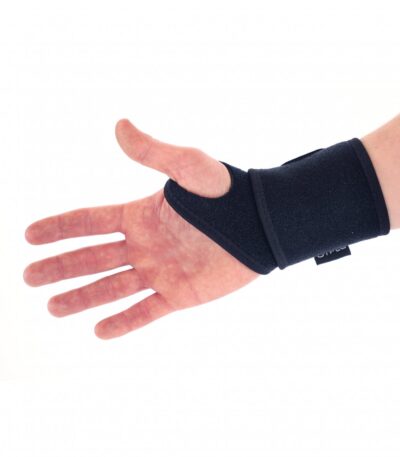
Airprene Wrist Wrap
Original price was: KSh 1,700.00.KSh 1,400.00Current price is: KSh 1,400.00.An Airprene wrist wrap is a soft, flexible brace made from breathable Airprene material that snugly wraps around your wrist to provide support and stability. It helps reduce strain, discomfort, and swelling caused by sprains, overuse, or repetitive movements.
The wrap applies gentle compression to the wrist joint, improving blood circulation and giving your muscles and tendons the support they need to recover. Its adjustable straps allow you to customize the fit, keeping the wrist secure without restricting movement of the hand and fingers.
Because Airprene is lightweight and breathable, the wrap remains comfortable even during extended wear or physical activity.
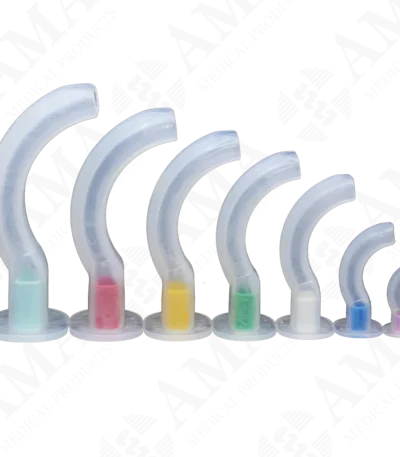
Airway Guedel – All Sizes
Original price was: KSh 300.00.KSh 150.00Current price is: KSh 150.00.A Guedel Airway, also known as an Oropharyngeal Airway (OPA), is a curved, hollow medical device inserted into a patient’s mouth to keep the upper airway open and prevent the tongue from obstructing airflow. These devices are available in a full range of sizes to accommodate neonates, children, and adults.
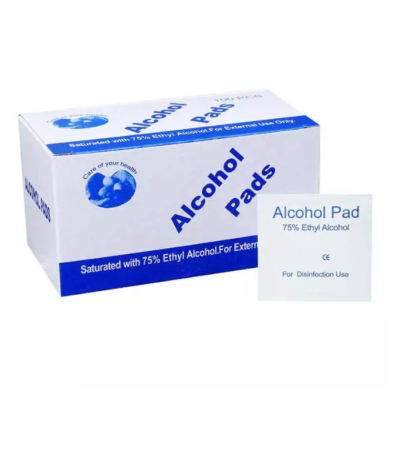
Alcohol Pads
Original price was: KSh 380.00.KSh 250.00Current price is: KSh 250.00.Features:
-
Individually packaged for hygiene and convenience
-
Easy to carry and use anywhere
-
Fast-drying and non-irritating to most skin types
-
Suitable for medical, home, or travel use
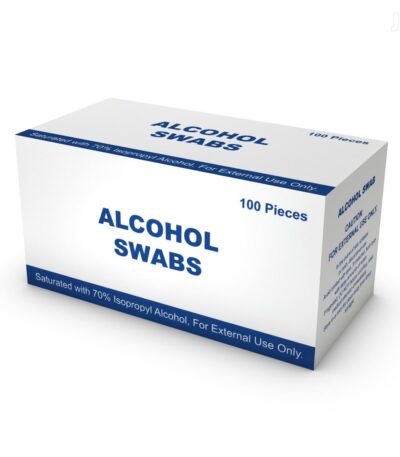
Alcohol Pads (100s)
Original price was: KSh 380.00.KSh 250.00Current price is: KSh 250.00.Alcohol pads are small, individually wrapped swabs saturated with 70% isopropyl alcohol. They are used for skin disinfection before injections, blood tests, and minor procedures.
A package labeled “100s” contains 100 individually sealed pads.
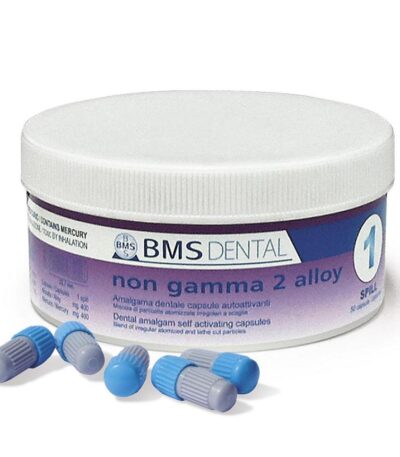
Amalgam Capsule (F2)
Original price was: KSh 7,500.00.KSh 5,000.00Current price is: KSh 5,000.00.Amalgam Capsules (F2) are pre-dosed, sealed capsules containing a precise ratio of dental amalgam alloy powder and mercury, designed for convenient and consistent mixing. They are used for direct dental restorations, particularly for posterior teeth, offering excellent durability and strength.
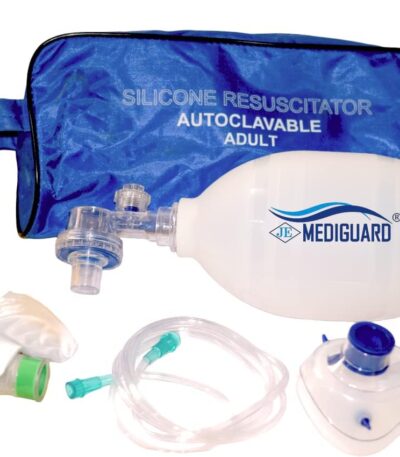
Ambu Bag (Adult Resuscitator)
Original price was: KSh 6,000.00.KSh 4,000.00Current price is: KSh 4,000.00.The adult Ambu bag consists of a self-inflating silicone or PVC bag, a one-way valve system, and a face mask. When squeezed by hand, the bag pushes air (or oxygen-enriched air) into the patient’s lungs through the mask or an endotracheal tube. When released, it automatically re-expands, drawing in fresh air for the next ventilation.
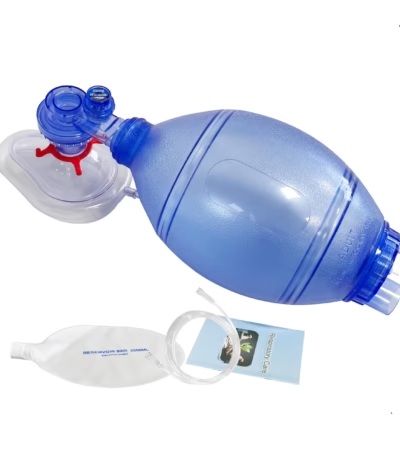
Ambu Bag (Paediatric Resuscitator)
Original price was: KSh 6,000.00.KSh 4,000.00Current price is: KSh 4,000.00.The paediatric Ambu bag functions by manually compressing a self-inflating bag that delivers air or oxygen-enriched gas to the patient’s lungs via a mask or endotracheal tube. It is designed with smaller capacity and gentle airflow control to suit the delicate respiratory system of children and infants. The device can be connected to an oxygen source and includes an oxygen reservoir bag for delivering high concentrations of oxygen.
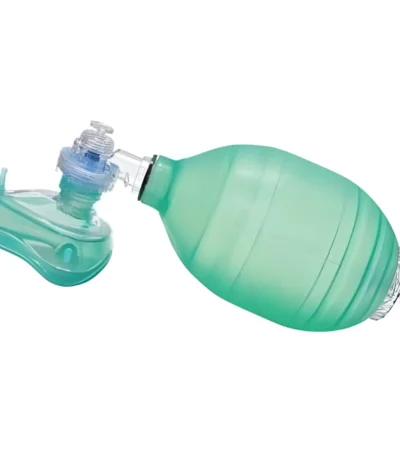
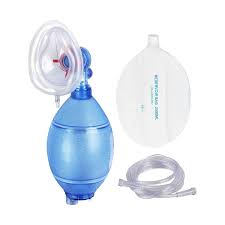
Ambu Bag Adult
Original price was: KSh 4,500.00.KSh 4,000.00Current price is: KSh 4,000.00.mbu bag or generically as a manual resuscitator or resuscitator bag, is a handheld first aid tool used to deliver positive pressure ventilation to any subject who is not breathing or not breathing adequately. When performing CPR with an Ambu bag it is imperative to maintain a good mask seal. An Ambu bag consists of a self-inflating bag, a one-way valve, a mask, and an oxygen reservoir. Ambu bags can also be used to maintain airway patency, for example, in cases of severe asthma attacks or allergic reactions. Oxygen reservoir allows the user to deliver higher concentration of oxygen to the patient.
How to do CPR with an Ambu bag?
- See if there is another way you can get a patient who is not breathing to breathe again. If this cannot be done, proceed with an Ambu bag.
- Make sure the patient’s airway is clear of mucus and not blocked by any foreign bodies or their own tongue.
- Tilt the patient’s head back slightly so that the nose is up. You can place something under their neck or shoulders to keep them in the right position, like a rolled up towel or jumper.
- Ensure that the Ambu bag is sealed and connected properly. The bag should be connected to the oxygen tubing, and the tubing should be connected to the regulator on the tank.
- Place the mask tightly over the patient’s mouth and nose.
- Begin ventilations. Squeeze the Ambu bag hard enough to make the patient’s chest rise just as it would with a normal breath. Squeeze once every 2-3 seconds for a child, every 5-6 seconds for an adult. If the patient’s head is not rising, adjust their position and try again.
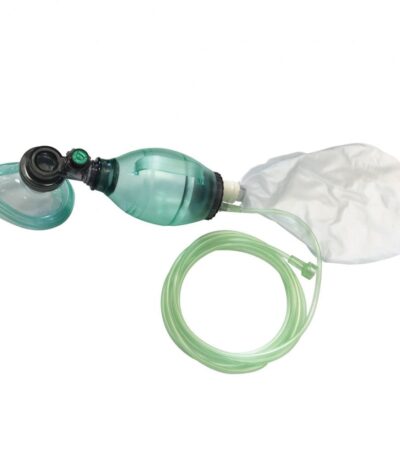
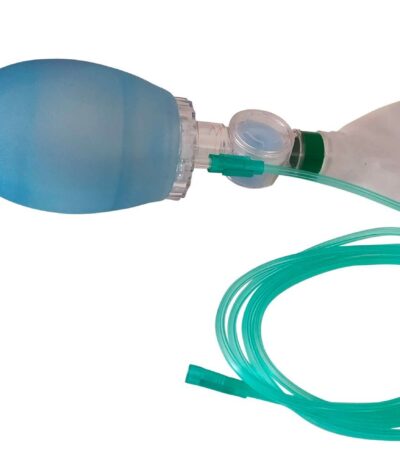
Ambu bag Paed
Original price was: KSh 5,000.00.KSh 4,000.00Current price is: KSh 4,000.00.Ambu bag or generically as a manual resuscitator or resuscitator bag, is a handheld first aid tool used to deliver positive pressure ventilation to any subject who is not breathing or not breathing adequately. When performing CPR with an Ambu bag it is imperative to maintain a good mask seal. An Ambu bag consists of a self-inflating bag, a one-way valve, a mask, and an oxygen reservoir. Ambu bags can also be used to maintain airway patency, for example, in cases of severe asthma attacks or allergic reactions. Oxygen reservoir allows the user to deliver higher concentration of oxygen to the patient.
How to do CPR with an Ambu bag?
- See if there is another way you can get a patient who is not breathing to breathe again. If this cannot be done, proceed with an Ambu bag.
- Make sure the patient’s airway is clear of mucus and not blocked by any foreign bodies or their own tongue.
- Tilt the patient’s head back slightly so that the nose is up. You can place something under their neck or shoulders to keep them in the right position, like a rolled up towel or jumper.
- Ensure that the Ambu bag is sealed and connected properly. The bag should be connected to the oxygen tubing, and the tubing should be connected to the regulator on the tank.
- Place the mask tightly over the patient’s mouth and nose.
- Begin ventilations. Squeeze the Ambu bag hard enough to make the patient’s chest rise just as it would with a normal breath. Squeeze once every 2-3 seconds for a child, every 5-6 seconds for an adult. If the patient’s head is not rising, adjust their position and try again.
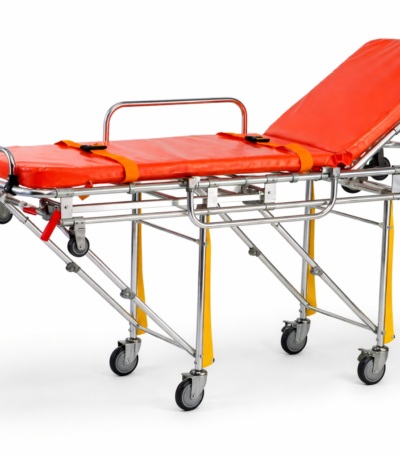
AMBULANCE STRETCHER.
Original price was: KSh 95,000.00.KSh 70,000.00Current price is: KSh 70,000.00.Key features include:
-
Strong, reinforced frame built to support patients securely during emergencies.
-
Adjustable backrest to position the patient comfortably based on their condition.
-
Foam-padded mattress for comfort during movement.
-
Collapsible or foldable legs that automatically fold when loading into the ambulance.
-
Smooth-rolling wheels with locking brakes for controlled movement.
-
Safety belts to secure the patient during transport.
-
Side rails that prevent falls and improve safety.
-
Easy-to-clean materials suitable for medical and emergency environments.
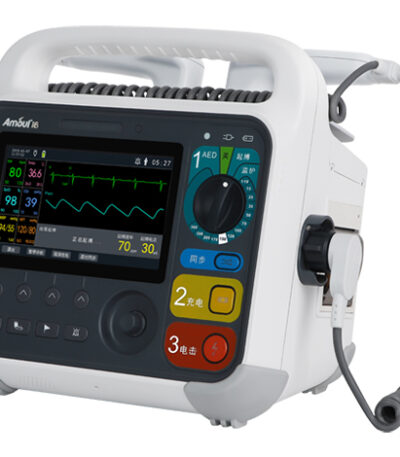
Amoul Defibrillator
Original price was: KSh 980,000.00.KSh 580,000.00Current price is: KSh 580,000.00.The Amoul Defibrillator is designed to make life-saving intervention faster, safer, and more accessible—whether you’re in a hospital, ambulance, clinic, or a public emergency situation. Known for its reliability and intuitive operation, Amoul defibrillators combine smart technology with a user-friendly design that supports both trained professionals and first responders.
In critical moments, every second matters. Amoul devices guide users through clear voice prompts, visual indicators, and automatic analysis to ensure the right shock is delivered at the right time. With durable construction and dependable battery life, these units are built to work in demanding environments such as emergency scenes, ambulances, and high-traffic public places.


