

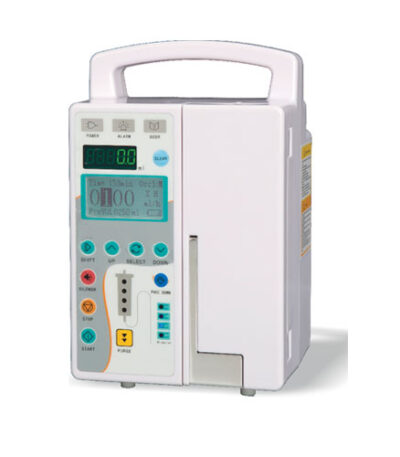
Infusion Pump
Infusion Pump is a medical device used to deliver fluids—such as medications, nutrients, or blood products—precisely and steadily into a patient’s bloodstream through an IV (intravenous) line. It replaces manual drips with accurate, controlled delivery over a set period of time.
💉 What It Does
-
Controls infusion rate: You can set how fast or slow the fluid is delivered (e.g., milliliters per hour).
-
Accurate dosing: Ensures patients receive the exact prescribed amount of medicine or fluid.
-
Automated monitoring: The pump alerts caregivers if there’s a blockage, air in the line, or if the fluid runs out.
🧪 Where It’s Used
Infusion pumps are common in:
-
Hospitals and ICUs
-
Surgery and emergency rooms
-
Home healthcare (for long-term therapy)
-
Cancer treatment units (for chemotherapy)
⚙️ Key Features
-
Digital display and controls for easy programming
-
Alarms and safety alerts for occlusions or empty bags
-
Battery backup for use during power interruptions
-
Multiple infusion modes depending on therapy needs
💚 Benefits
-
Provides precise, consistent delivery of fluids and medications
-
Reduces human error compared to manual drip systems
-
Helps manage long and complex treatments comfortably
-
Improves patient safety and care quality
An Infusion Pump is an essential tool in modern healthcare, helping clinicians deliver treatments reliably and safely.
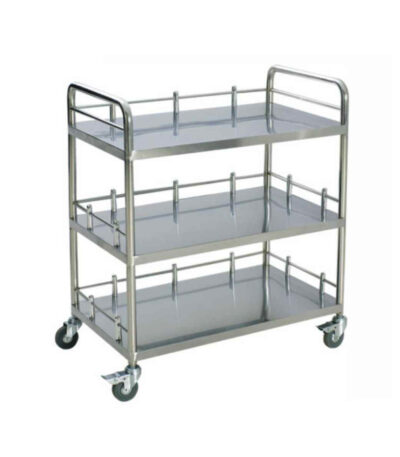
Instrument / Medicine Trolley
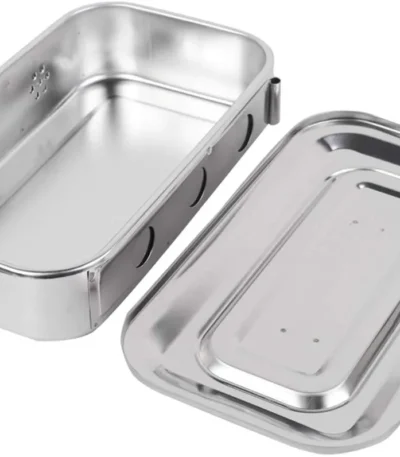
Instrument Tray
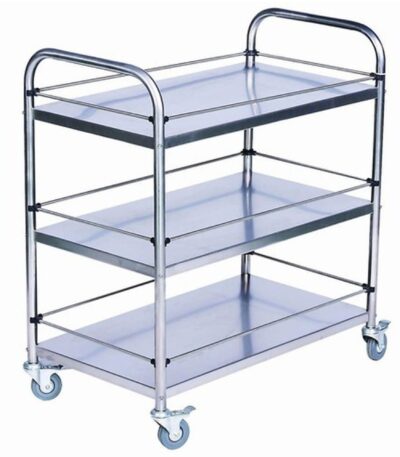
Instrument Trolley
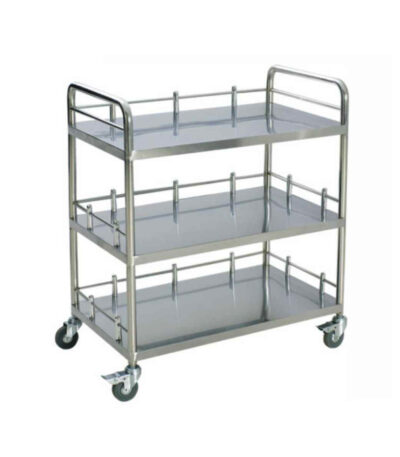
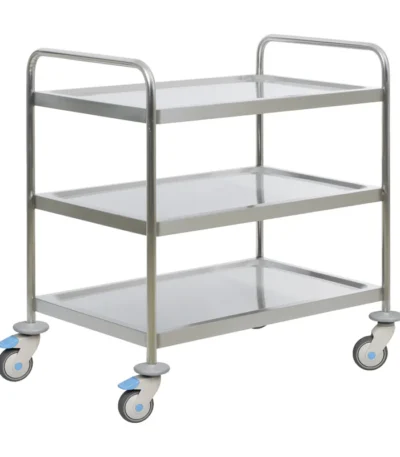
Instrument Trolley
Description:
-
Structure: Usually made of stainless steel or powder-coated metal, providing durability, easy cleaning, and resistance to corrosion.
-
Design: Consists of two or more shelves (tiers) for holding instruments.
-
Mobility: Fitted with four wheels (casters), two of which may have brakes for stability.
-
Handle: Has a side handle for easy movement.
-
Top Shelf: Often used for immediate-use instruments during procedures.
-
Bottom Shelf: Used for storing additional or less frequently used equipment.
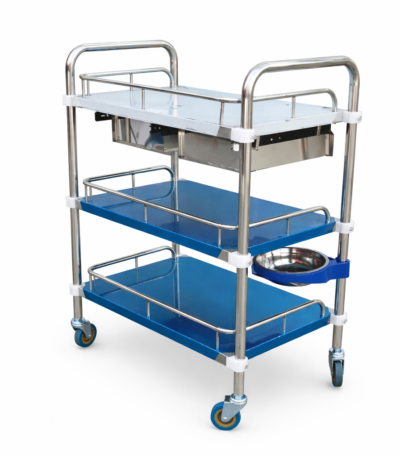
Instrument trolley( 3 shelves)
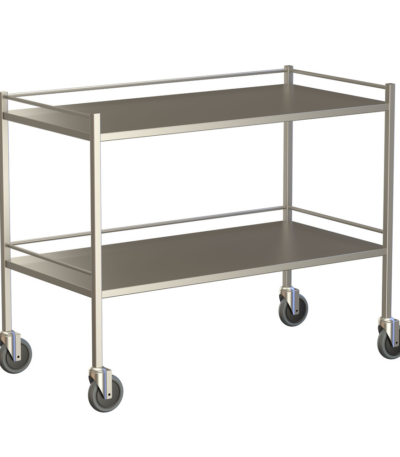
INSTRUMENT TROLLY
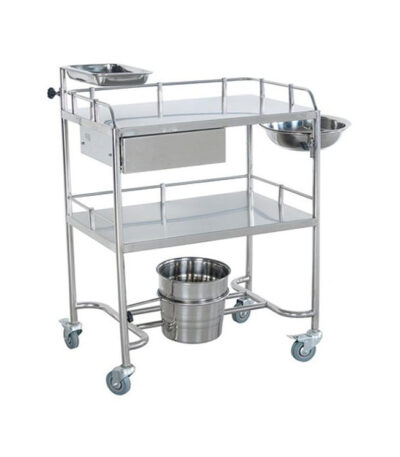
Instrument/Medicine Trolley
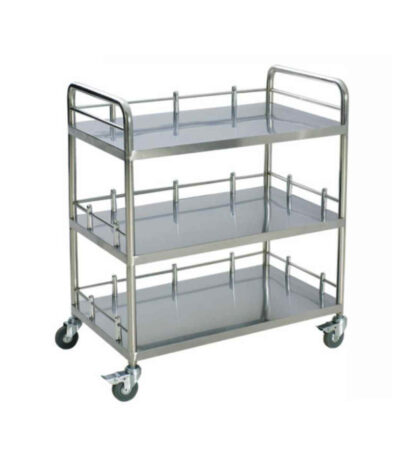
Instrument/Medicine trolley
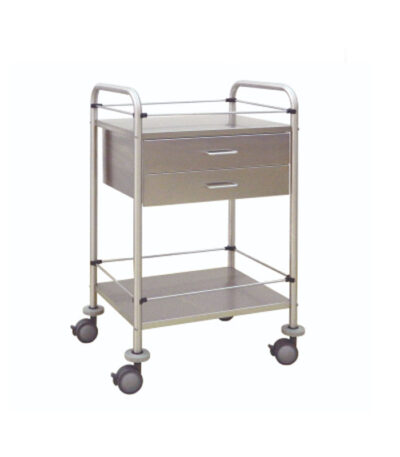
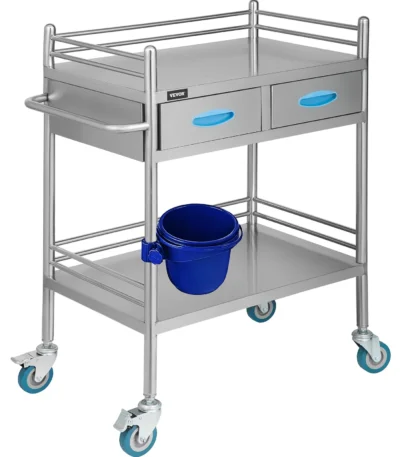
Instrument/Medicine Trolley 2 Shelves/2 Drawers
duct Overview
This mobile instrument/medicine trolley is designed for clinical, hospital, or laboratory settings, offering convenient access, organized storage and smooth mobility. The unit features two open shelves plus two drawers, enabling efficient arrangement of supplies, instruments or medications while maintaining a compact footprint.
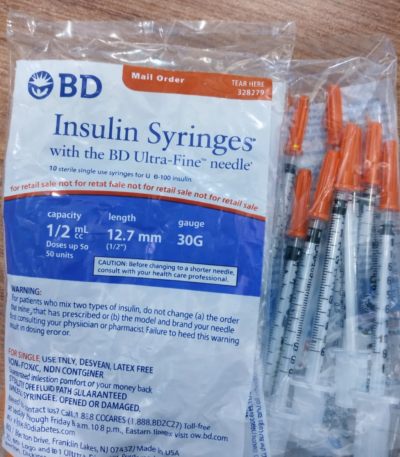
Insulin Syringe 0.5 mL (Pack of 100)
-
Purpose & Use
-
Used primarily for self-administering insulin to manage diabetes.
-
Can also be used for other precise subcutaneous injections where small doses are needed.
-
Designed for accurate dosing in 0.5 mL or 50 units (depending on the markings).
-
-
Structure & Components
-
Barrel: transparent plastic, usually polypropylene, with clear, easy-to-read measurement markings.
-
Plunger: smooth-moving, usually made of plastic or rubber tip, ensures accurate dosing.
-
Needle: very fine gauge, typically 28–31G, designed to reduce pain.
-
Needle length: usually 8–12 mm, appropriate for subcutaneous injection.
-
Often pre-attached and sterile, ready for single use.
-
-
Packaging
-
Sold in packs of 100 syringes, individually wrapped to maintain sterility.
-
Convenient for clinics, hospitals, or personal use for daily insulin injections.
-
-
Safety & Quality
-
Single-use only to prevent infections or cross-contamination.
-
Designed with sharp, thin needles to minimize discomfort.
-
Some syringes include safety features such as needle covers to prevent accidental sticks.
-
-
Material & Disposal
-
Made from medical-grade, sterile plastics.
-
Biodegradable components are limited; proper disposal in sharps containers is required.
-
-
Accuracy & Comfort
-
Fine gradations ensure precise dosing, which is crucial for diabetes management.
-
Thin, short needles reduce pain and tissue trauma during injections.
-
-
Usage Guidelines
-
Used once and then safely disposed of in a sharps container.
-
Keep syringes sterile until use to prevent contamination.
-
Handle carefully to avoid needle sticks.
-
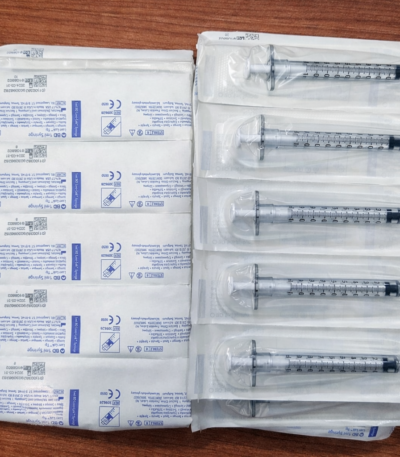
Insulin Syringe 1 mL (Pack of 100)
-
Purpose & Use
-
Used primarily for self-administering insulin to manage diabetes.
-
Also suitable for other subcutaneous injections that require larger doses up to 1 mL.
-
Allows for precise dosing for insulin or other medications.
-
-
Structure & Components
-
Barrel: transparent plastic (usually polypropylene) with clear graduated markings for accurate measurement.
-
Plunger: smooth-moving, often with a rubber tip for a tight seal, enabling precise dosage control.
-
Needle: very fine gauge (usually 28–31G) to minimize pain.
-
Needle length: typically 8–12 mm, optimized for subcutaneous injections.
-
Syringes are pre-attached with sterile needles, ready for single-use.
-
-
Packaging
-
Sold in packs of 100 syringes, individually wrapped to ensure sterility.
-
Convenient for clinics, hospitals, and personal use for frequent injections.
-
-
Safety & Quality
-
Single-use only to prevent infection or cross-contamination.
-
Fine, sharp needles reduce discomfort and tissue trauma.
-
Some models may include safety features, such as protective needle caps, to prevent accidental pricks.
-
-
Material & Disposal
-
Made of medical-grade, sterile plastics.
-
Proper disposal in sharps containers is necessary due to needle components.
-
-
Accuracy & Comfort
-
Clear graduations ensure precise dosing, important for diabetes management.
-
Thin, short needles reduce injection pain and tissue damage.
-
-
Usage Guidelines
-
Keep syringes sterile until use.
-
Use once and then dispose safely in a sharps container.
-
Handle carefully to avoid needle sticks.
-


