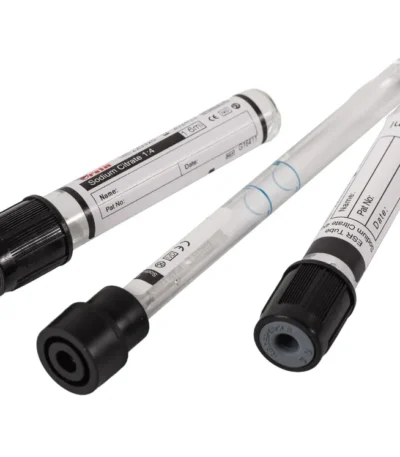
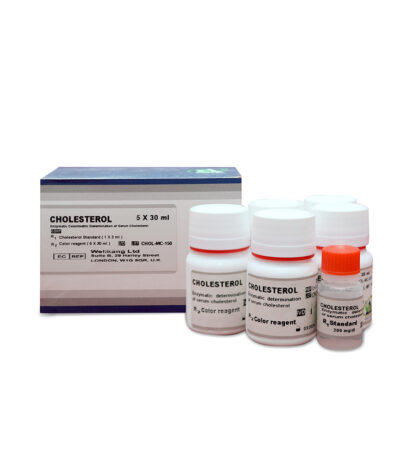
Biotech: High-Density Lipoprotein cholesterol reagent-biochemistry
🔬 HDL Chemistry Reagents (Clinical Chemistry / Lipid Panel)
HDL reagents are used to quantify High-Density Lipoprotein cholesterol in serum or plasma as part of a lipid profile. In semi-automated systems (bench-top analyzers, open systems, manual/semi-auto photometric readers), the reagents must be:
-
Stable at 2–8°C
-
Compatible with open-channel analyzers
-
Ready-to-use or with simple reconstitution
-
Optimized for endpoint or two-reagent homogeneous methods
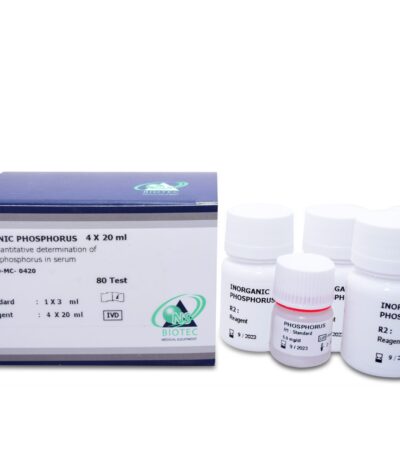
Biotech: Phosphorus Reagents-biochemistry
Principle of Measurement
1. UV Phosphomolybdate Method (Most modern analyzers)
How it works:
-
Inorganic phosphate reacts with ammonium molybdate in an acidic medium.
-
Forms a phosphomolybdate complex.
-
The complex is measured photometrically in the UV range (usually 340 nm).
-
The absorbance is directly proportional to phosphate concentration.
Advantages:
-
Fast and highly specific
-
Suitable for fully automated analyzers
-
Minimal interference
2. Reduced Phosphomolybdate Method (Colorimetric)
How it works:
-
Phosphomolybdate complex is formed.
-
The complex is reduced to a blue-colored compound (“molybdenum blue”).
-
Measured at 600–700 nm, depending on dye.
Advantages:
-
Strong color intensity
-
Stable reaction for manual or semi-automatic systems
Reagent Components
Phosphorus reagent kits typically include:
R1 (Acid/Molybdate reagent)
-
Ammonium molybdate
-
Sulfuric acid or perchloric acid
-
Stabilizers
-
Surfactants
-
Preservatives
R2 (Reducing reagent) (if applicable)
-
Reducing agents (e.g., ascorbic acid, stannous chloride)
-
Dye stabilizers
Some kits are single-reagent formulations.
Packaging Formats
-
Liquid-stable ready-to-use reagents
-
Two-reagent systems (R1 + R2)
-
Analyzer-specific cartridges
-
Optional calibrators and controls
Common volumes: 25 ml, 50 ml, 100 ml, 250 ml.
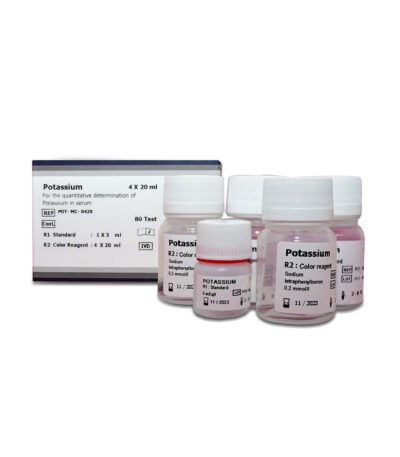
Biotech: Potassium Reagents-biochemistry
Measurement Methods & Corresponding Reagents
1. Ion-Selective Electrode (ISE) Method (Most common in modern analyzers)
Reagents include:
-
Internal standard (reference solution)
-
Electrolyte solution for K⁺ electrode balance
-
Conditioning solution
-
Electrode cleaning solution
-
Calibrators (Low & High K⁺)
Principle:
Potassium-selective membranes generate an electrical potential when exposed to K⁺ ions.
The potential difference is proportional to potassium concentration.
ISE is fast, accurate, and ideal for automated analyzers.
2. Turbidimetric/Colorimetric Tetraphenylboron Method
How it works:
-
Potassium reacts with sodium tetraphenylboron.
-
Forms a turbid or cloudy precipitate.
-
The degree of turbidity is measured photometrically at 510–550 nm.
-
Intensity correlates with potassium concentration.
Reagents contain:
-
Sodium tetraphenylboron
-
Buffer solution
-
Surfactants
-
Stabilizers
-
Preservatives
Used in: Semi-auto analyzers and manual systems.
Packaging Formats
-
Single-liquid reagent bottles
-
Multi-solution electrolyte packs (for ISE analyzers)
-
Ready-to-use liquid stable reagents
-
Analyzer-specific cartridges
Typical sizes: 25 ml, 50 ml, 100 ml, 250 ml.
Sample Types
-
Serum
-
Plasma
-
Urine (may require dilution)
-
Whole blood (in ISE/blood gas analyzers)
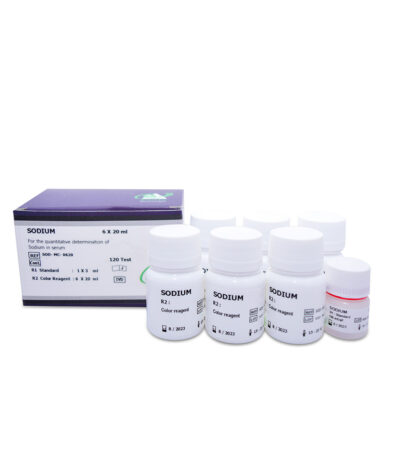
Biotech: Sodium Reagents-biochemistry
1. Ion-Selective Electrode (ISE) Method
Most modern chemistry analyzers use ISE for sodium.
Reagents include:
-
Reference solution / Internal standard
-
Electrolyte solution for electrode stability
-
Conditioning solution
-
Cleaning solution
-
Calibration solutions (Low & High Na⁺ standards)
Principle:
The sodium ISE membrane selectively binds Na⁺ ions, generating an electrical potential proportional to sodium concentration. Calibration solutions are crucial for accuracy.
2. Flame Photometry Method
Older or standalone electrolyte analyzers may use flame photometry.
Reagents include:
-
Diluent
-
Standard sodium solution
-
Internal lithium standard (in some systems)
-
Cleaning solutions
Principle:
Sodium emits light at a characteristic wavelength (589 nm) when introduced into a flame. The emitted intensity is proportional to concentration.
3. Colorimetric (Photometric) Method
Used in some semi-automatic chemistry analyzers when ISE is not available.
Reagents include:
-
Ionophore-based chromogenic reagents
-
Buffer solution
-
Color-forming indicator dye
-
Stabilizers and preservatives
Principle:
Sodium ions react with a specific ionophore dye to produce a measurable color change.
Reagent Format
Sodium reagent kits may include:
-
Single bottle (for colorimetric systems)
-
Multi-solution packs (ISE systems)
-
Standards in sealed ampoules or bottles
-
Ready-to-use liquid formulations
Sample Types
-
Serum
-
Plasma
-
Urine (diluted appropriately)
-
Whole blood (in ISE blood gas analyzers)
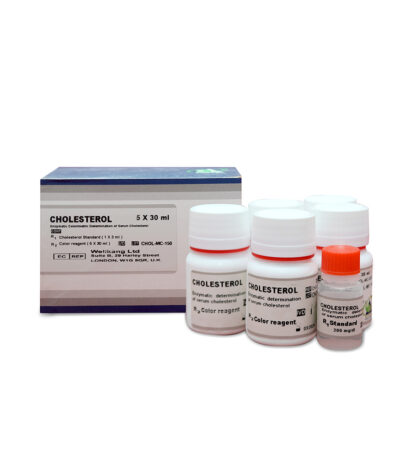
Biotech: Total Cholesterol Reagents-biochemistry
🔬 1. CHOD-PAP Method (Gold Standard)
Principle
-
Cholesterol esterase converts cholesterol esters → free cholesterol
-
Cholesterol oxidase converts cholesterol → cholest-4-en-3-one + H₂O₂
-
Peroxidase (POD) uses H₂O₂ to produce a colored dye
-
Common chromogens: 4-AAP, TOOS, DAOS, HDAOS
-
Absorbance: measured at 500–550 nm depending on chromogen.
What the Reagents Contain
R1 (Buffer / Chromogen)
-
Good’s buffer (e.g., PIPES, TES)
-
Phenol or TOOS/DAOS derivatives
-
Stabilizers & surfactants
-
Preservatives
R2 (Enzyme Reagent)
-
Cholesterol esterase
-
Cholesterol oxidase
-
Peroxidase
-
Additional surfactants
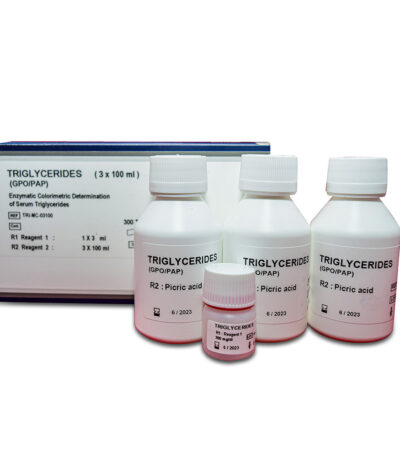
Biotech: Triglycerides (TG) Reagents- biochemistry
🔬 1. Szasz Method (Standard for GGT)
Principle
GGT catalyzes the transfer of the γ-glutamyl group from a synthetic donor substrate to an acceptor molecule.
Reaction: L-γ-glutamyl-3-carboxy-4-nitroanilide
-
Glycylglycine
→ 5-amino-2-nitrobenzoate (colored product) -
γ-glutamyl-glycylglycine
The rate of formation of 5-amino-2-nitrobenzoate is measured kinetically.
Measurement
-
Absorbance: 405–410 nm
-
Mode: Kinetic, multiple readings (rate method)
-
Proportional to: GGT activity (U/L)
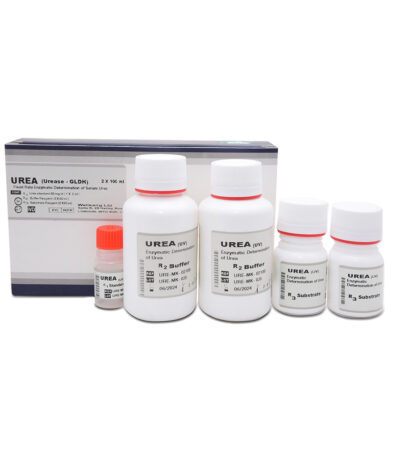
Biotech: Urea Reagents-biochemstry
Principle of Measurement
1. Urease–GLDH Method (Enzymatic UV)
(Most widely used, highly specific)
How it works:
-
Urease enzyme hydrolyzes urea → ammonia + carbon dioxide.
-
Ammonia reacts with α-ketoglutarate in the presence of GLDH (glutamate dehydrogenase).
-
NADH is oxidized to NAD⁺, causing a decrease in absorbance at 340 nm.
-
The rate of absorbance decrease is proportional to urea concentration.
Advantages:
-
Very specific
-
Minimal interference
-
Ideal for automated chemistry analyzers
2. Berthelot (Indophenol) Colorimetric Method
(Common in semi-auto analyzers)
How it works:
-
Urease converts urea to ammonia.
-
Ammonia reacts with phenol and hypochlorite → blue indophenol dye.
-
Absorbance measured at 580–600 nm.
Advantages:
-
Stable color formation
-
Suitable for manual and semi-automatic systems
3. Diacetyl Monoxime (DAM) Method (Older method)
Forms a yellow complex; used mainly in research.
Reagent Components
Urease–GLDH Reagents May Contain:
-
Urease enzyme
-
GLDH enzyme
-
NADH
-
α-ketoglutarate
-
Buffer solution
-
Surfactants and stabilizers
-
Preservatives
Berthelot Reagents May Contain:
-
Phenol
-
Sodium nitroprusside
-
Hypochlorite
-
Buffer solution
Packaging Formats
-
Two-reagent systems (R1 buffer + R2 enzyme)
-
Single-reagent kits (less common)
-
Analyzer-specific liquid cartridges
Typical volumes: 25 ml, 50 ml, 100 ml, 250 ml.
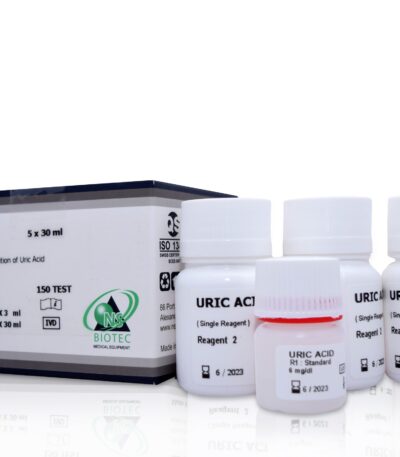
Biotech: Uric Acid Reagents-biochemistry
Principle of Measurement
1. Uricase–Peroxidase (Uricase/POD) Method (Most common)
Reaction Process
-
Uricase converts uric acid into allantoin, CO₂, and hydrogen peroxide (H₂O₂).
-
H₂O₂ reacts with a chromogenic dye in the presence of peroxidase, forming a colored quinone-imine or similar compound.
-
The color intensity is measured photometrically between 520–550 nm, proportional to uric acid concentration.
Advantages:
-
High specificity
-
Minimal interference from glucose, ascorbate, and bilirubin (depending on kit formulation)
-
Widely compatible with automated analyzers
Reagent Components
A typical uric acid reagent kit contains:
R1 (Buffer/Enzyme reagent)
-
Phosphate buffer
-
Uricase enzyme
-
Peroxidase enzyme
-
Chromogenic dye precursors
-
Surfactants and stabilizers
-
Preservatives
R2 (Color reagent) (in two-reagent systems)
-
Dye enhancer or color-developing components
-
Auxiliary stabilizers
-
Preservatives
Some kits come as single ready-to-use reagent.
Packaging Formats
-
Liquid-stable reagents (most common)
-
Two-reagent packs (R1 + R2)
-
Analyzer-specific cartridges
-
Optional calibrators and controls
Common volumes: 25 ml, 50 ml, 100 ml, 250 ml, and larger bulk sizes.
Sample Types
-
Serum
-
Plasma (heparin, EDTA)
-
Urine (usually diluted before measurement)
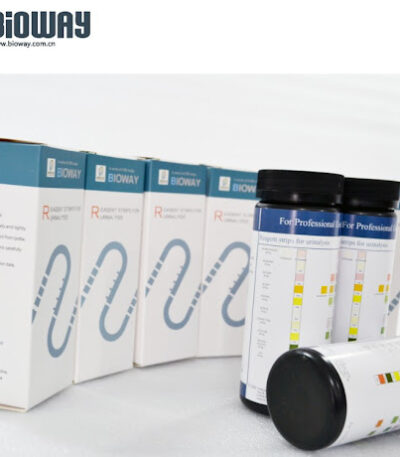
BIOWAY URS-10H Reagent Strips for Urinalysis
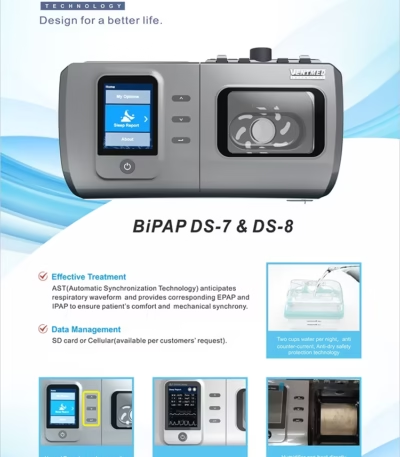
BiPAP Machine Ventmed
BiPAP Machine (Ventmed) is a medical device designed to assist people with breathing difficulties—especially those with conditions like COPD, severe sleep apnea, or other respiratory insufficiencies. BiPAP stands for Bi‑level Positive Airway Pressure, meaning it provides two different pressures: a higher pressure when you breathe in (inhale) and a lower pressure when you breathe out (exhale). This makes breathing easier and more natural compared to a standard CPAP machine.
🌬️ How It Works
-
Inhalation Support: The machine delivers a higher pressure to help open the airway and assist lung inflation.
-
Exhalation Ease: It lowers the pressure during exhalation so breathing out feels more comfortable and less effortful.
🫁 Who It Helps
BiPAP is especially useful for people who:
-
Have COPD (chronic obstructive pulmonary disease)
-
Need extra ventilatory support
-
Experience difficulty exhaling against pressure
-
Have advanced sleep apnea requiring variable pressure
-
Recovering from certain respiratory conditions
🔑 Key Benefits
-
Eases both inhaling and exhaling
-
Improves oxygenation and ventilation
-
Reduces work of breathing
-
Supports better sleep and respiratory function
-
Often adjustable to suit individual needs
⚙️ Common Features
-
Adjustable pressure settings
-
Comfort‑oriented design
-
Some models include humidification
-
Easy controls and clear display
The Ventmed BiPAP Machine combines effective respiratory support with patient comfort, helping users breathe more easily whether at night, during recovery, or as part of chronic care.