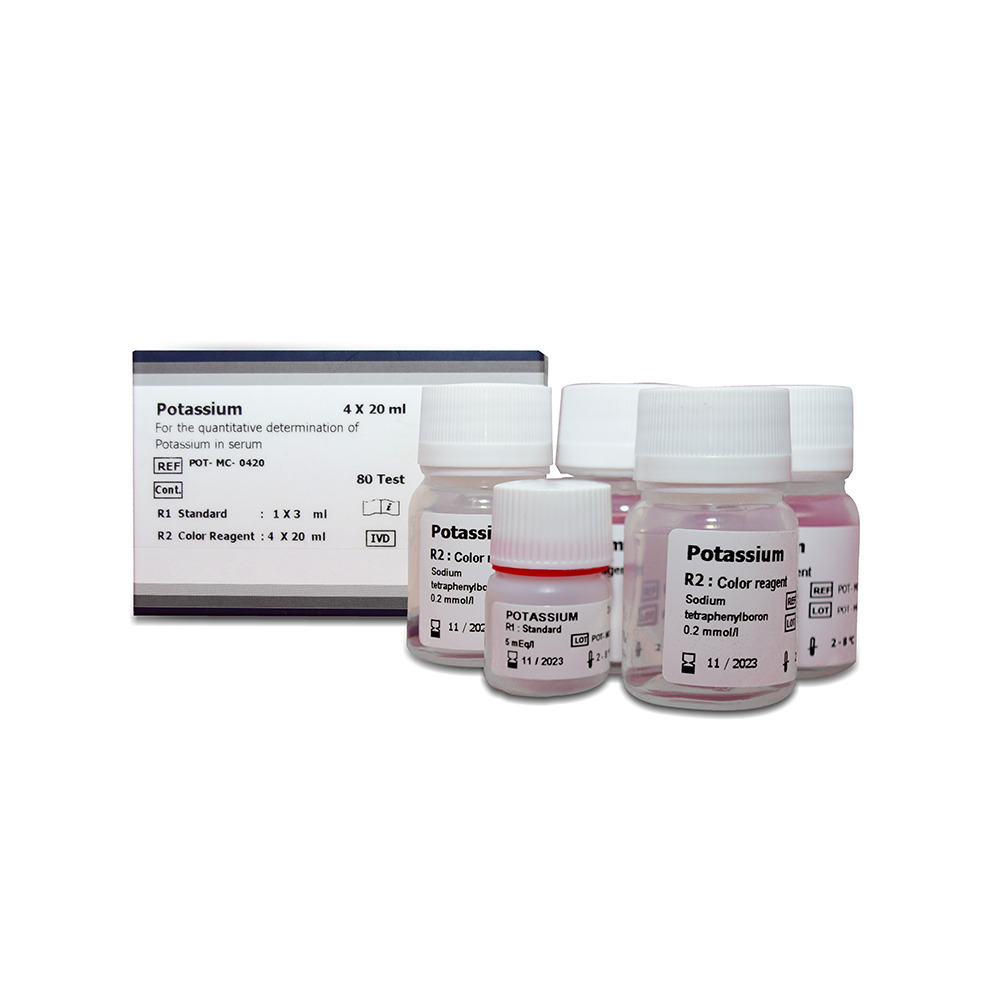
Biotech: Potassium Reagents-biochemistry

Measurement Methods & Corresponding Reagents

1. Ion-Selective Electrode (ISE) Method (Most common in modern analyzers)

Reagents include:

  • Internal standard (reference solution)

  • Electrolyte solution for K⁺ electrode balance

  • Conditioning solution

  • Electrode cleaning solution

  • Calibrators (Low & High K⁺)

Principle:

Potassium-selective membranes generate an electrical potential when exposed to K⁺ ions.
The potential difference is proportional to potassium concentration.
ISE is fast, accurate, and ideal for automated analyzers.


2. Turbidimetric/Colorimetric Tetraphenylboron Method

How it works:

  1. Potassium reacts with sodium tetraphenylboron.

  2. Forms a turbid or cloudy precipitate.

  3. The degree of turbidity is measured photometrically at 510–550 nm.

  4. Intensity correlates with potassium concentration.

Reagents contain:

  • Sodium tetraphenylboron

  • Buffer solution

  • Surfactants

  • Stabilizers

  • Preservatives

Used in: Semi-auto analyzers and manual systems.


Packaging Formats

  • Single-liquid reagent bottles

  • Multi-solution electrolyte packs (for ISE analyzers)

  • Ready-to-use liquid stable reagents

  • Analyzer-specific cartridges

Typical sizes: 25 ml, 50 ml, 100 ml, 250 ml.


Sample Types

  • Serum

  • Plasma

  • Urine (may require dilution)

  • Whole blood (in ISE/blood gas analyzers)

Original price was: KSh5,000.00.Current price is: KSh3,800.00.

15 People watching this product now!

Customer Reviews