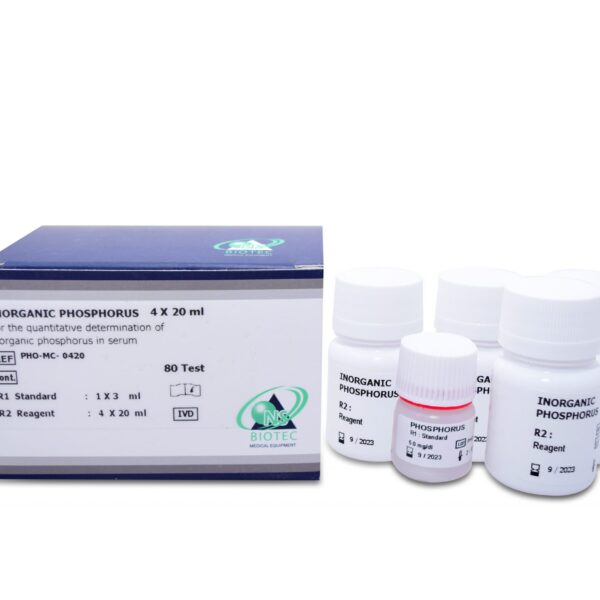
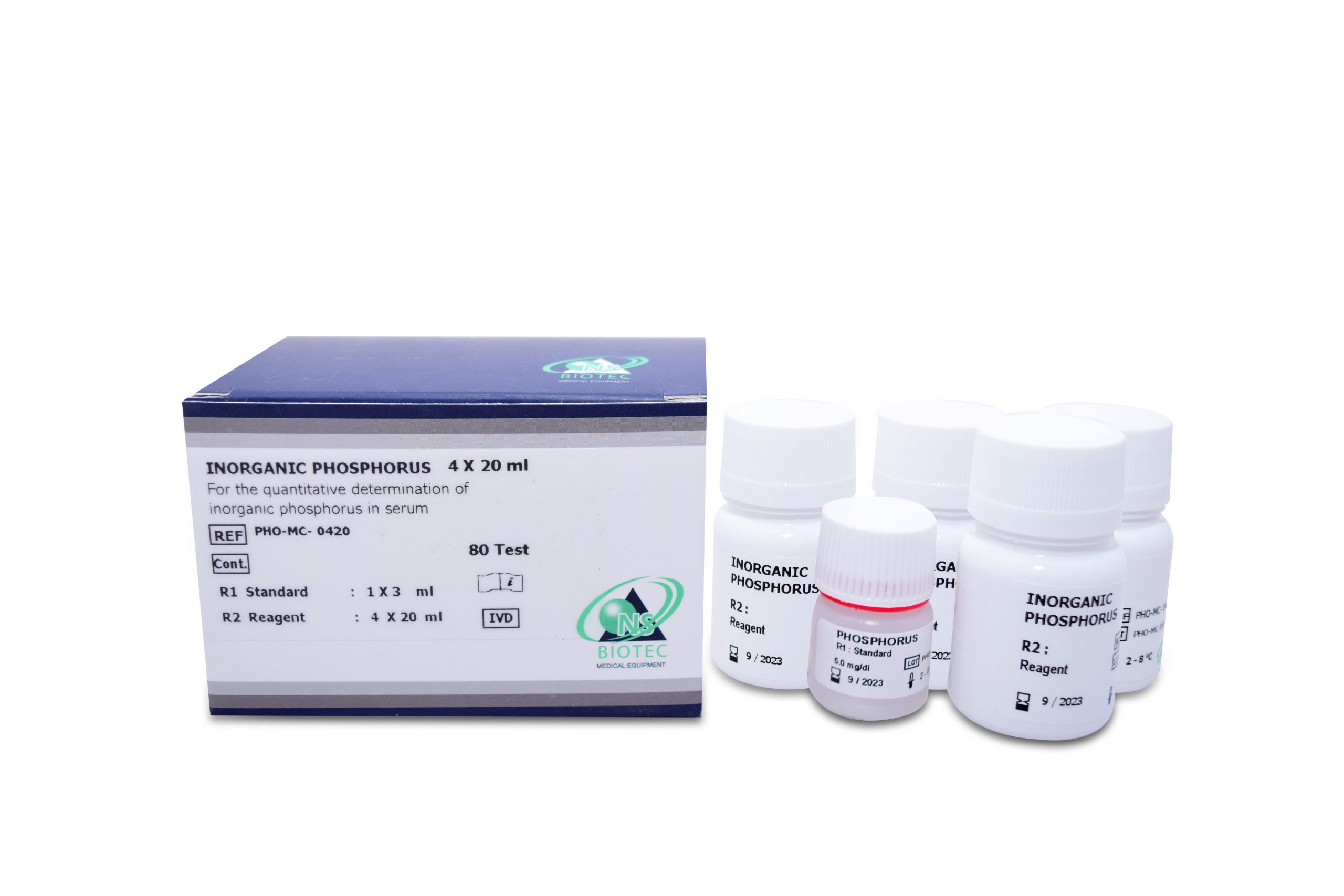
Biotech: Phosphorus Reagents-biochemistry
Principle of Measurement
1. UV Phosphomolybdate Method (Most modern analyzers)
How it works:
-
Inorganic phosphate reacts with ammonium molybdate in an acidic medium.
-
Forms a phosphomolybdate complex.
-
The complex is measured photometrically in the UV range (usually 340 nm).
-
The absorbance is directly proportional to phosphate concentration.
Advantages:
-
Fast and highly specific
-
Suitable for fully automated analyzers
-
Minimal interference
2. Reduced Phosphomolybdate Method (Colorimetric)
How it works:
-
Phosphomolybdate complex is formed.
-
The complex is reduced to a blue-colored compound (“molybdenum blue”).
-
Measured at 600–700 nm, depending on dye.
Advantages:
-
Strong color intensity
-
Stable reaction for manual or semi-automatic systems
Reagent Components
Phosphorus reagent kits typically include:
R1 (Acid/Molybdate reagent)
-
Ammonium molybdate
-
Sulfuric acid or perchloric acid
-
Stabilizers
-
Surfactants
-
Preservatives
R2 (Reducing reagent) (if applicable)
-
Reducing agents (e.g., ascorbic acid, stannous chloride)
-
Dye stabilizers
Some kits are single-reagent formulations.
Packaging Formats
-
Liquid-stable ready-to-use reagents
-
Two-reagent systems (R1 + R2)
-
Analyzer-specific cartridges
-
Optional calibrators and controls
Common volumes: 25 ml, 50 ml, 100 ml, 250 ml.
KSh 5,000.00 Original price was: KSh 5,000.00.KSh 3,600.00Current price is: KSh 3,600.00.