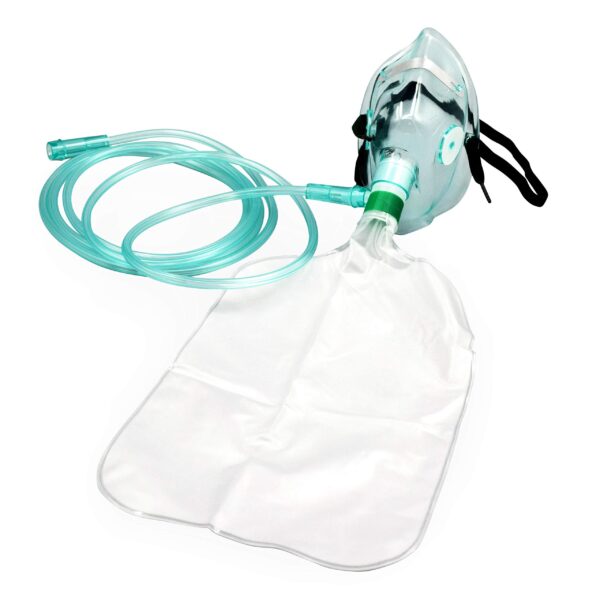
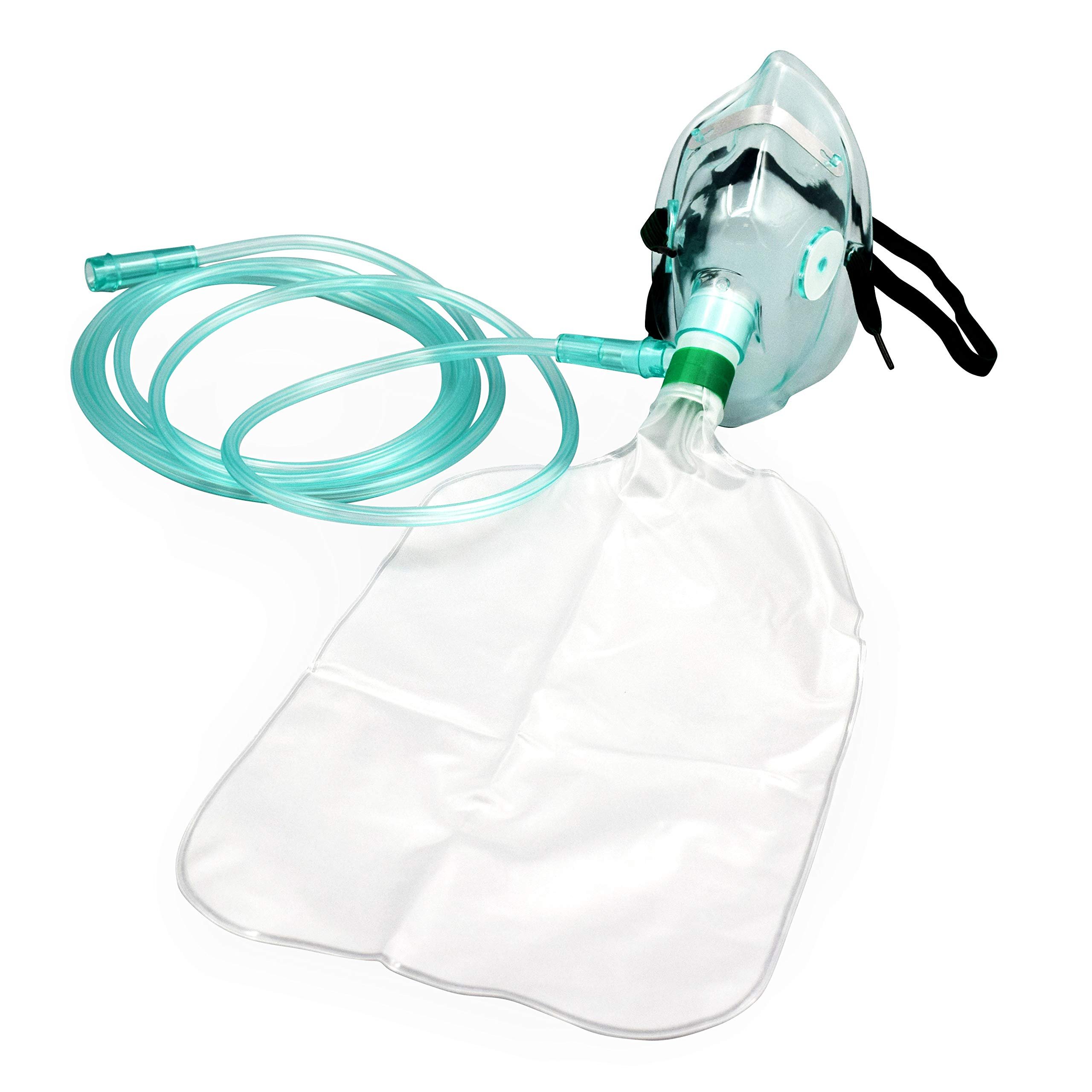
Non-Rebreather Mask (Paediatric)
-
Purpose & Use
-
A paediatric non-rebreather mask is used to deliver high concentrations of oxygen (60–100%) to children and infants experiencing severe hypoxia, respiratory distress, or trauma.
-
Designed to prevent exhaled air from mixing with supplied oxygen, ensuring maximum oxygen delivery to the patient.
-
-
Target Patient Population
-
Sized specifically for neonates, infants, and children.
-
Fits appropriately to cover the nose and mouth of smaller patients without excessive dead space.
-
-
Structure & Components
-
Mask: soft, flexible material to ensure comfort and minimal leakage.
-
Reservoir bag: smaller than adult versions, stores oxygen for inhalation.
-
One-way valves:
-
Between the mask and reservoir bag to allow inhalation of oxygen only.
-
On exhalation ports to prevent CO₂ rebreathing.
-
-
Elastic or Velcro straps: adjustable to secure mask on a child’s face.
-
Oxygen tubing connector: connects to an oxygen source.
-
-
Performance & Flow Rate
-
Provides high oxygen concentration (up to 100%) when properly fitted.
-
Oxygen flow typically 10–15 L/min for older children, and 5–10 L/min for infants depending on size.
-
One-way valves prevent rebreathing of CO₂.
-
-
Advantages
-
Rapidly increases oxygen saturation in paediatric patients.
-
Simple and effective high-flow oxygen delivery without intubation.
-
Disposable, reducing the risk of cross-contamination.
-
Lightweight and easy to apply to small patients.
-
-
Usage Guidelines
-
Ensure proper fit to minimize leaks.
-
Connect to appropriate high-flow oxygen source based on patient size.
-
Monitor oxygen saturation, respiratory rate, and comfort continuously.
-
Check that the reservoir bag remains partially inflated during inspiration.
-
Used as a short-term intervention until more definitive airway support is available if needed.
-
KSh 350.00 Original price was: KSh 350.00.KSh 250.00Current price is: KSh 250.00.